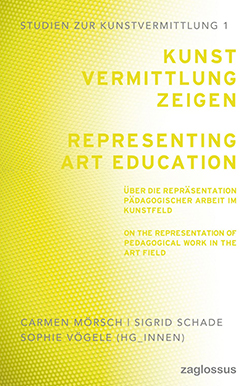
Studien zur Kunstvermittlung

Kunst/Pädagogische Primitivismen
Studien zu einem transnationalen Dispositiv
Schriftenreihe Studien zur Kunstvermittlung
Band 7, München 2026 (Oktober), 600 Seiten
ISBN 978-3-96848-157-9
Produktbeschreibung
Die Kunsterziehungsbewegungen, die ab dem letzten Dritten des 19. Jahrhunderts im Kontext westlicher bürgerlicher Reformpädagogik entstanden, zielten auf die Befreiung des Kindes – weg vom geometrischen Zeichendrill, hin zum freien Ausdruck. Sie entstanden zugleich am Höhepunkt des europäischen Kolonialismus sowie massiven Widerstands dagegen und sind damit über die Konstruktion des Primitiven eng verstrickt. Was bedeutet diese Kolonialität für die Geschichte der Diskurse und Praktiken an der Schnittstelle von Kunst und Bildung und wie wirkt sie weiter? Mit einem transnationalen Ansatz, der unterbelichtete Austauschbeziehungen und die Wanderung von Konzepten in den Blick nimmt, diskutiert der Band Fallstudien und entwickelt Forschungsperspektiven zur Kolonialität der Kunsterziehungsbewegungen.
The progressive art education movements, surging from the last third of the 19th century on in the context of Western bourgeois progressive education, aimed to liberate the child—away from the drudgery ofgeometric drawing and toward free expression. They emerged at the heydey of European colonialism—as well as massive resistance opposing it—and are deeply intertwined in it, a central articulation being the construction of primitivism. What does this coloniality mean for the history of discourses and practices at the intersection of art and education, and what are its lasting impacts? Taking a transnational approach that focuses on underresearched exchanges and the travelling of concepts, this volume examines case studies and develops research perspectives on the coloniality of progressive art education.
The progressive art education movements, surging from the last third of the 19th century on in the context of Western bourgeois progressive education, aimed to liberate the child—away from the drudgery ofgeometric drawing and toward free expression. They emerged at the heydey of European colonialism—as well as massive resistance opposing it—and are deeply intertwined in it, a central articulation being the construction of primitivism. What does this coloniality mean for the history of discourses and practices at the intersection of art and education, and what are its lasting impacts? Taking a transnational approach that focuses on underresearched exchanges and the travelling of concepts, this volume examines case studies and develops research perspectives on the coloniality of progressive art education.
Verlagsinfos
Herzlich willkommen auf unseren Verlagsseiten!
In unserem Programm finden Sie Fachpublikationen rund um die Themenfelder
Medien/pädagogik Kunst/pädagogik Kultur/pädagogik und angrenzende Bereiche.
Viel Spaß beim Stöbern und Blättern!
Aktuelle Meldungen
Newsletter
Hier können Sie unseren Newsletter bestellen oder abbestellen!
Weitere Titel
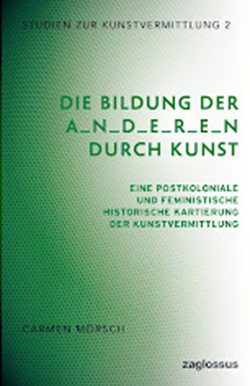
Die Bildung der A_n_d_e_r_e_n durch Kunst
Eine postkoloniale und feministische historische Kartierung der Kunstvermittlung
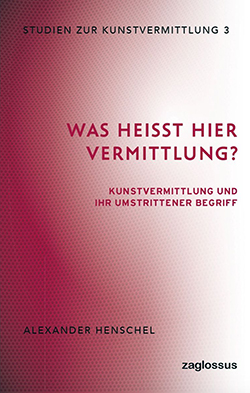
Was heißt hier Vermittlung?
Kunstvermittlung und ihr umstrittener Begriff